Gastropods
Family Hipponicidae & Calyptraeidae
Click on photo to enlarge. Scale line in photo equals 1cm unless otherwise specified.
* Species which are commonly encountered on the beach.
Calyptraeidae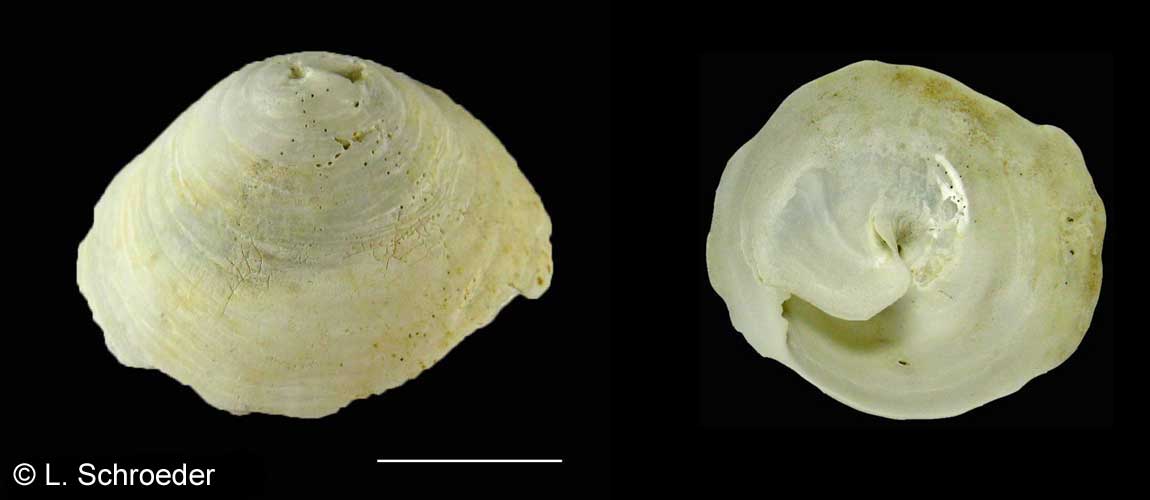
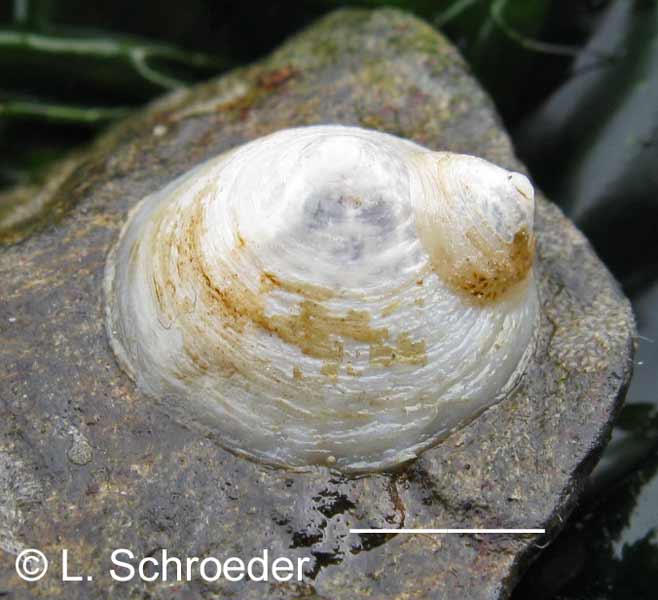
Whiskey Creek Beach, WA
Anacortes, WA, intertidal
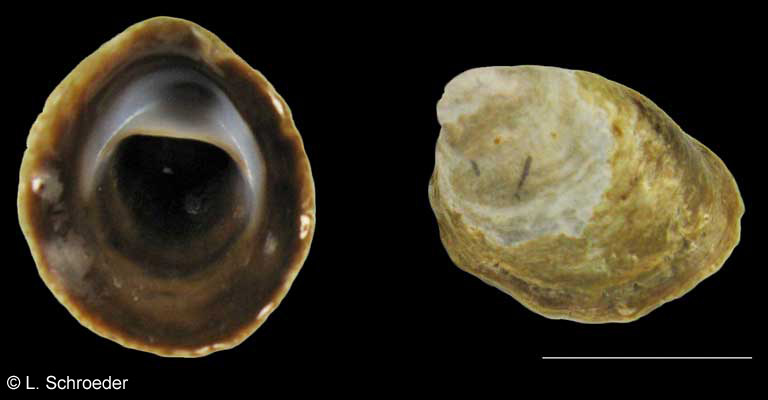
Calyptraea fastigiata Gould, 1846Cup-and-Saucer Snail
intertidal
to 137m southern California to
central Alaska size to 25mm
This
is occasionally found intertidally. It can easily be confused
with the Whitecap Limpet until it is overturned. This shell has a
partial shelf on the underside. It is also a thinner shell than
the limpet.
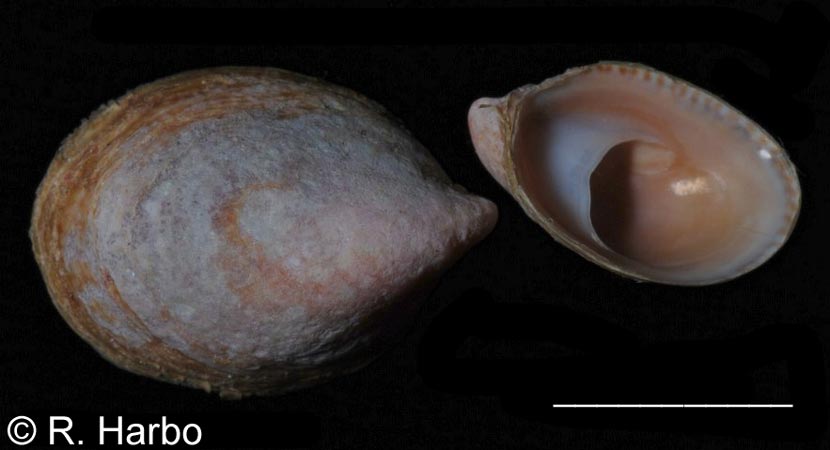
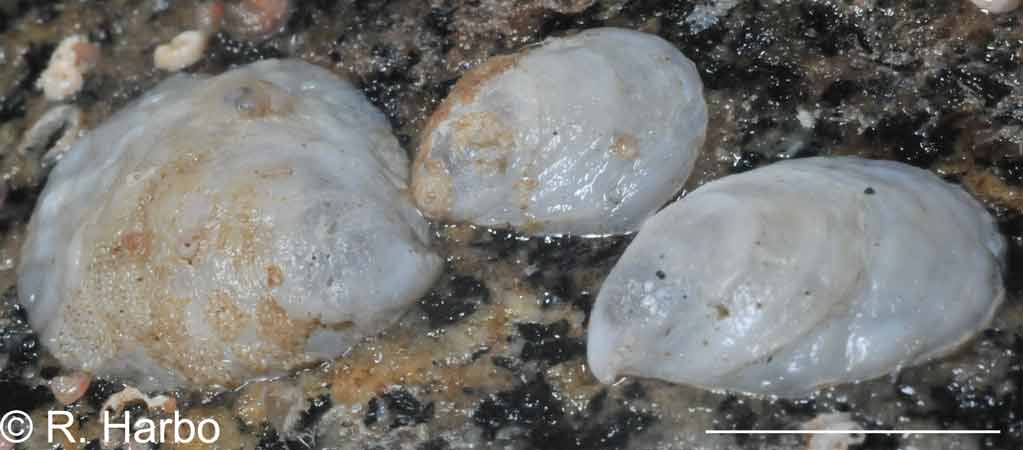
Hipponicidae Makah Bay, WA
Antisabia or Hipponix sp.Flat Hoofsnail
intertidal to subtidal size to 25mm
This
is infrequently found on the open coasts. The shell shape and
growth are irregular and often encrusted. It clings to rocks.
The Pacific Northwest hoof snails are still under study. More than one species is present.
Crepidula convexa Say, 1822
Atlantic Convex Slipper-shell
intertidal size to 20mm
southern California to southern BC; Caribbean to Massachusetts
This is infrequently found. It was introduced to the west coast from the Atlantic. It looks similar to our native C. adunca
except that the the apex is folded far forward. In the northwest it is only found in
isolated populations. It is usually attached to dead shells in our area.
(synonym - Crepidula glauca)
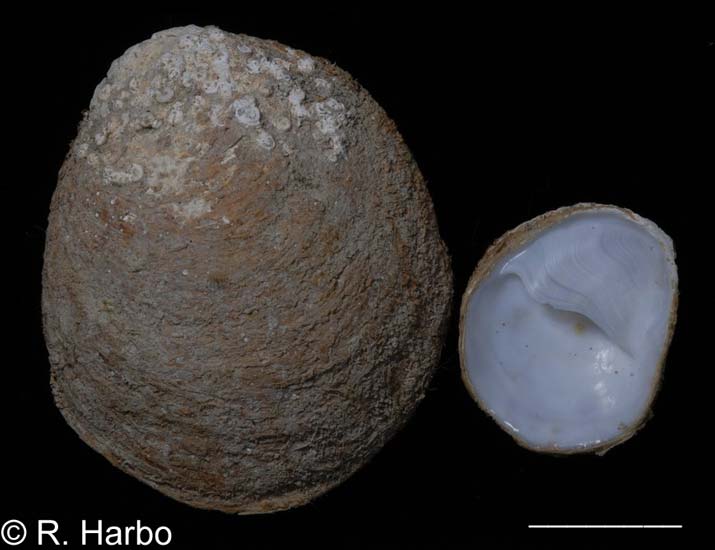
Waddah Island, WA Crepidula nummaria Gould, 1846
Northern White Slipper-shell
intertidal
to subtidal size to 46mm
northern California to BC
This species is found on the outer coast attached to rocks or dead shells. It typically has a shaggy brown periostracum. There is a notch
on the left edge of the interior shelf. The interior is glossy white.
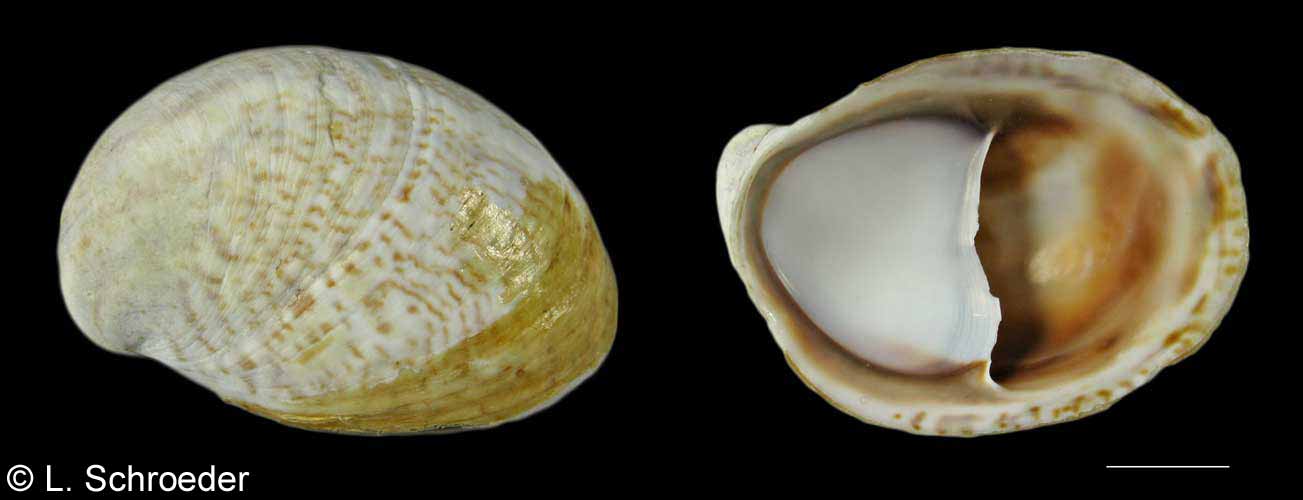
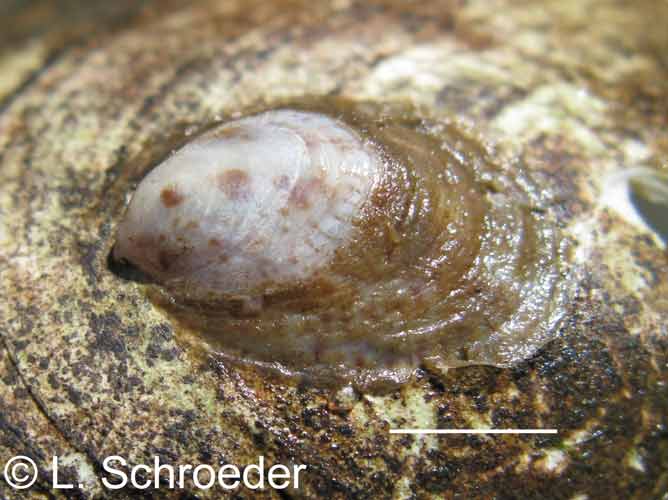
Penrose Point, WA
Big Fishtrap Cove, WA, intertidal
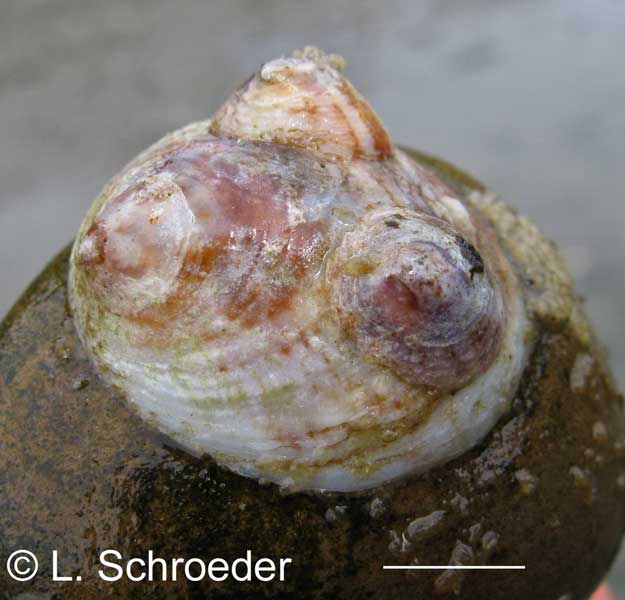
Crepidula fornicata (Linnaeus, 1758)Eastern Slipper-shell
intertidal Texas to Canada; introduced to Washington and BC, Japan and Europe size to 50mm
This
is usually common to find where it has established a population within the Salish Sea.
The shell usually has brown spots or blotches. It has a
thin brown periostracum which is often worn away. The interior has a bright white shelf.
Then shell is generally inflated. On the east coast it is often
found in stacks of several shells on top of each other. In our
area we rarely observe more than one male on top of a female shell.
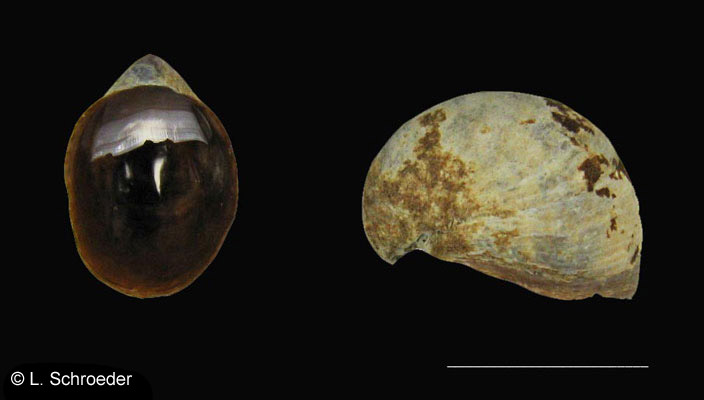
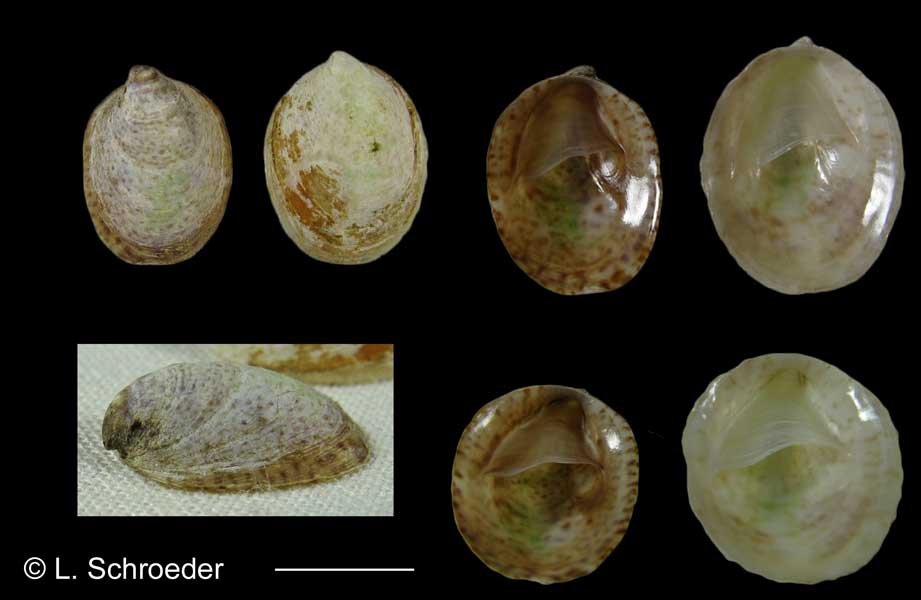
Boundary Bay, BC
Willapa Bay, WA
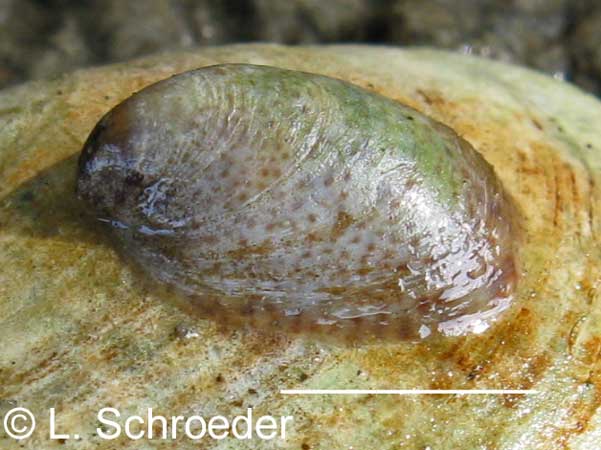 Willapa Bay, WA, intertidal
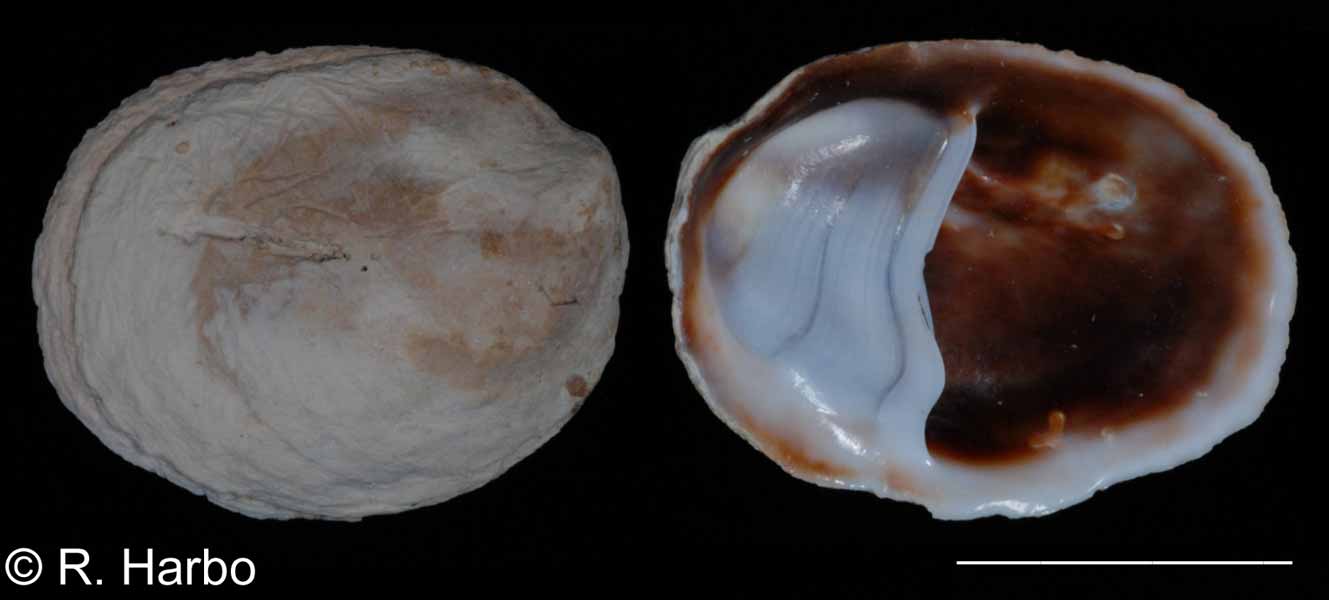
Crepidula fimbriata Reeve, 1859
Frilled Slipper-shell
intertidal to subtidal size to about 30mm
San Juan Islands, WA to south AK
This
species prefers protected and transitional waters
rather than the outer coast. It is found on rocks and dead
shells. It often has frilled margins and a dark brown interior
stain but these features may also be absent. It has no
periostracum. This species often identified as C. perforans before that species was known to only be on the outer coast.
Johnstone Strait, BC
Baja California, Mexico
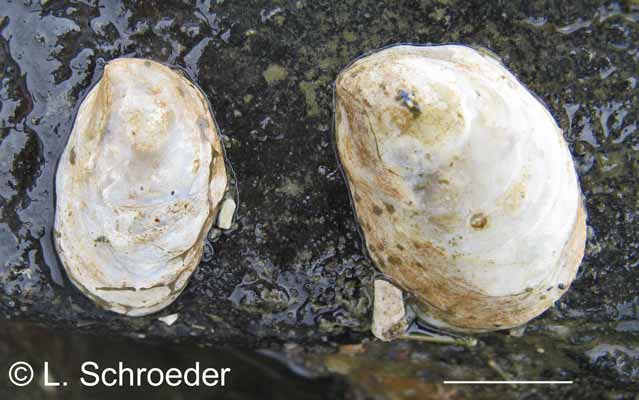
Crepidula norrisarium Williamson, 1905
intertidal to subtidal size to 35mm
northern Mexico to BC
This species prefers the protected waters within the Salish Sea. It has been long confused with C. adunca
and has a similar appearance. This shell has a more blunt apex and does
not have the pit in the shelf. It frequently carries its
juveniles on its back whereas the juveniles of C. adunca quickly crawl away.
 Petersburg, AK, intertidal
 Yakan Point, Haida Gwaii, BC
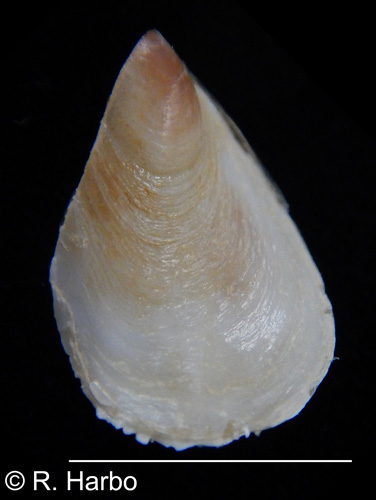
Crepidula perforans (Valenciennes, 1846)
Western White Slipper-shell
intertidal to subtidal size to 40mm
northern Mexico to Kodiak, AK
This species is found on the
outer coast where it resides under rocks. It can sometimes be
found in the holes of boring clams. The shell is smooth and white with a
glossy interior. It tends to have an elongated shape and a thin,
light-colored periostracum.
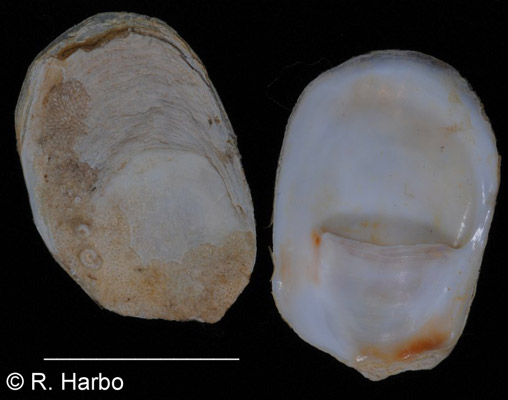
Crepidula williamsi Coe, 1947
Hermit Crab Slipper-snail
intertidal to at least 30m size to 40mm
California to Alaska
This
species is commonly found inside the aperture of dead snail shells
which are also occupied by hermit crabs. It may also be found on
other dead shells. The shell is mainly white with a dark stain or
radiating lines on the tip of the apex. It is also elongated in
shape.
Species
in the Calyptraeidae family are sequential hermaphrodites, meaning they
change sex at some point during their life. In the case of the
Slipper shells, one often sees a large female shell with one or more
smaller males attached to the back of its shell. As the female
ages and dies, the males grow and morph into females, with new
young males attaching to their shells.
Johnstone
Strait, BC
Ucluelet, BC,
intertidal
Bremerton, WA
Big Fishtrap Cove, WA, intertidal
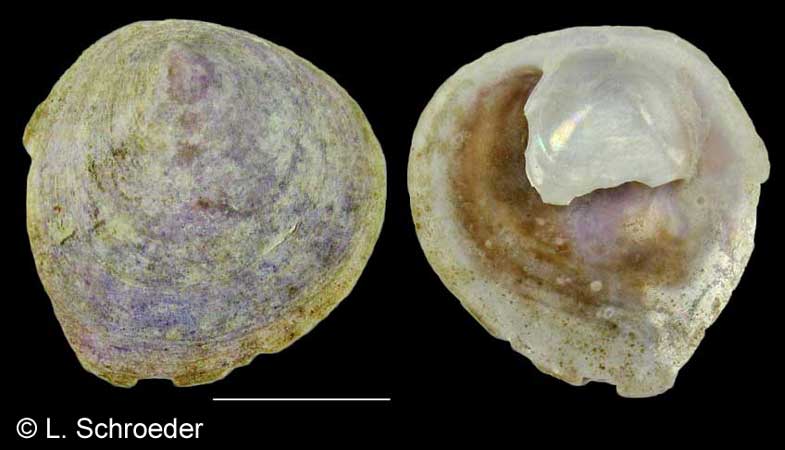
Crepipatella lingulata (Gould, 1846)Wrinkled Slipper-shell *intertidal
to 100m Mexico to northern Alaska
size to 25mm
This
is commonly found intertidally. The shell is mostly circular but
irregular based on the surface where it is living. The exterior
is somewhat wrinkled with a thin periostracum. Tan to mauve
blotches may also be evident. The apex is near the margin.
On the interior the small shelf sits under the apex.
This has frequently been called C. dorsata, but that is now considered a tropical species.
(synonyms - Crepidula lingulata, Crepidula fissurata)
This page last revised: 4-20-2026
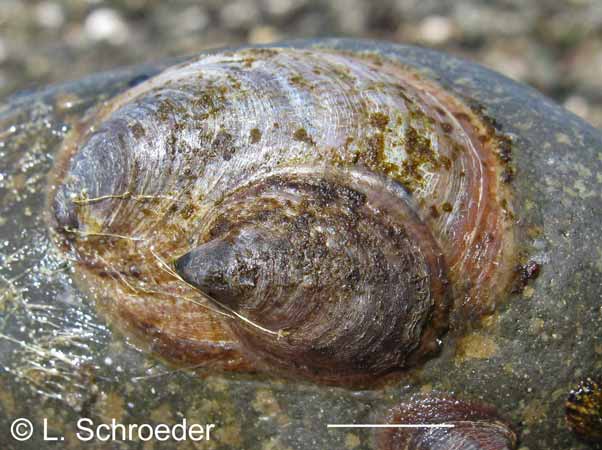
Bremerton, WA
Bremerton, intertidal
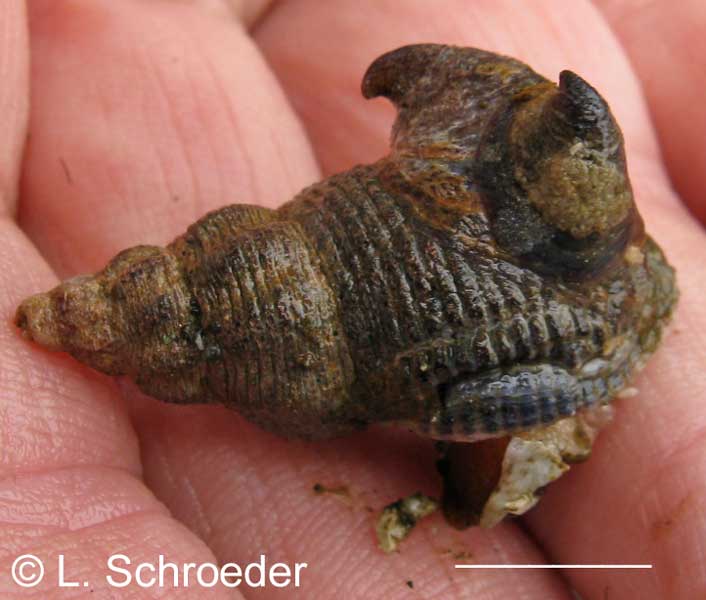
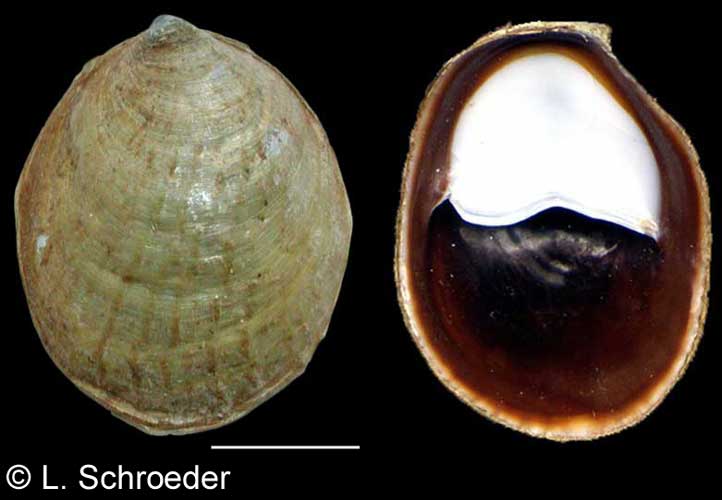
Crepidula onyx (Sowerby, 1824)Onyx Slipper-shell
intertidal
to 90m Chile to southern California;
Washington size to 70mm
This was
introduced to Puget Sound. It is occasional found where it has
established populations. This shell has a yellowish-brown
periostracum and occasional brown markings. The interior is
chocolate brown with a bright white shelf.